Fieldstone-wall joints
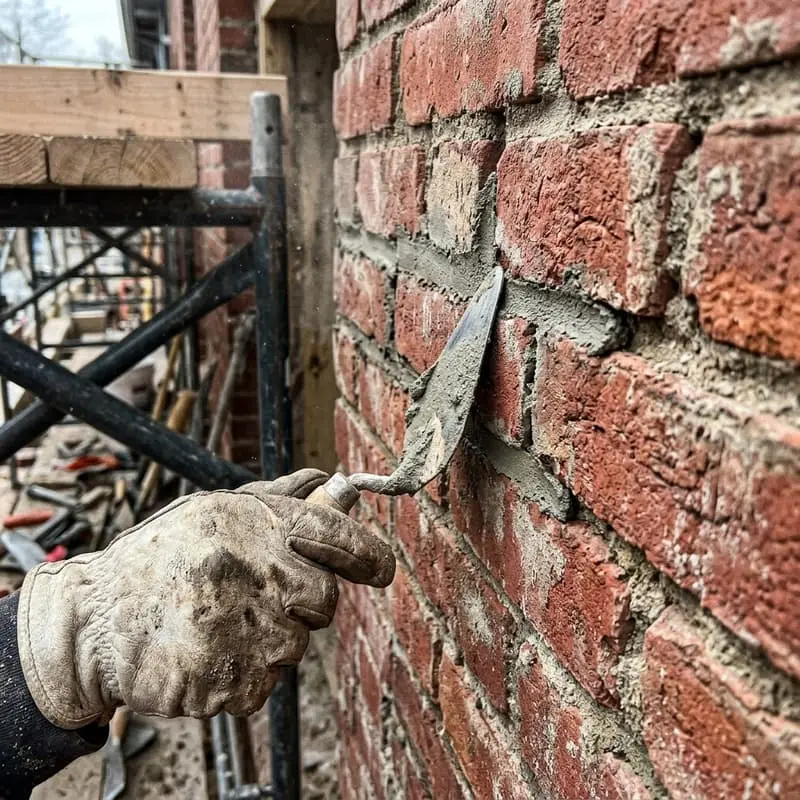
Deep voids and mixed previous repairs need careful removal and packing rather than a thin cosmetic face of new mortar.
Serving ZIP 06840 and nearby Fairfield County communities
New Canaan masonry often sits in shaded, wooded settings where slow drying, organic debris, and slope runoff affect stone walls, chimneys, steps, and patios. Repairs should improve drying and drainage as well as replace failed material.
New Canaan homes commonly sit on wooded or rolling lots where roof runoff, shaded masonry, and seasonal soil moisture affect foundations, fieldstone walls, steps, and chimneys.
Brick, stone, chimney, step, wall, and mortar assessment with repair recommendations based on moisture exposure and material compatibility.
Deep voids and mixed previous repairs need careful removal and packing rather than a thin cosmetic face of new mortar.
Long wet periods can accelerate joint loss, staining, and winter surface damage where drainage is slow.
Freestanding or retaining masonry may be affected by runoff, roots, soil pressure, and missing drainage behind the wall.
Repairs should account for slope and drainage beyond the damaged area; otherwise new joints or crack repairs may be asked to resist the same water pressure that caused the failure.
Map open joints, spalled units, stair-step cracks, and previous patches.
Check caps, flashing, grade, and horizontal surfaces for water entry.
Compare existing brick, stone, and mortar before specifying replacement materials.
Separate localized repointing from movement that needs structural investigation.
The final scope depends on what the inspection finds. Common options for this service include:
Repointing restores joints but does not correct an unstable base, soil pressure, or loss of wall geometry. The wall should be assessed for rebuilding or drainage work before joint repair.
Use the least aggressive cleaning method compatible with the material. High pressure and strong acids can erode mortar or alter stone and brick surfaces.