Vertical wall cracks
These may be shrinkage-related, but width, displacement, moisture, and change over time determine whether sealing alone is appropriate.
Serving ZIP 06901 and nearby Fairfield County communities
Foundation repair in Stamford begins by separating water-related cracking from active settlement or wall movement. Changes in grade, additions, driveways, and concentrated roof runoff can all influence the pattern seen inside a basement.
Stamford properties range from older masonry homes and multifamily buildings to newer additions built on tightly graded lots. Freeze-thaw cycling, wind-driven rain, and runoff concentrated by paved surfaces can expose weak mortar and drainage details.
Foundation crack, wall movement, settlement, and drainage assessment focused on identifying the cause before selecting a repair method.
These may be shrinkage-related, but width, displacement, moisture, and change over time determine whether sealing alone is appropriate.
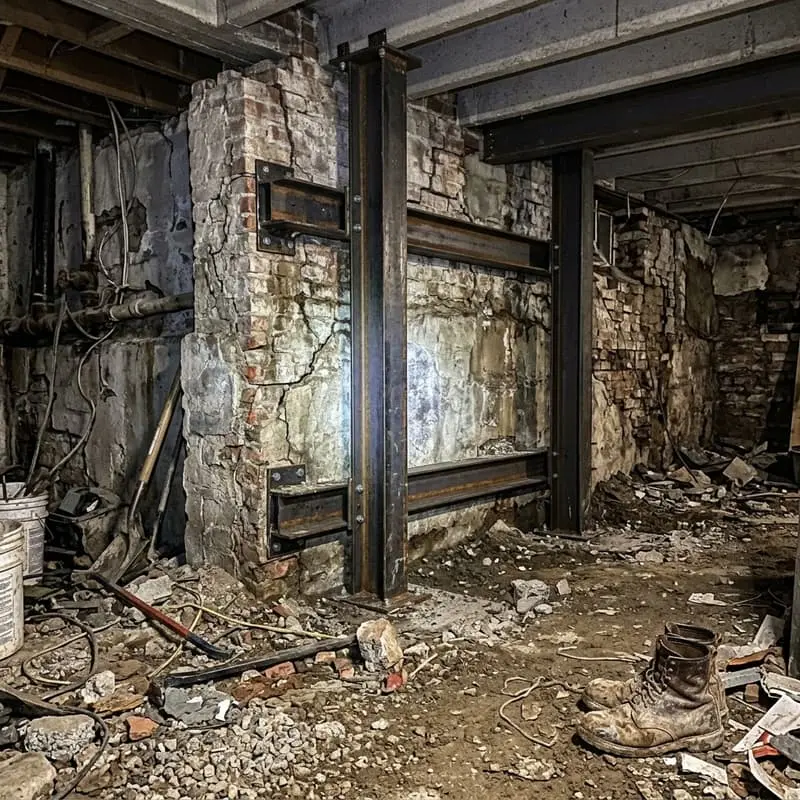
Cracking with inward wall movement or masonry displacement needs a structural assessment before cosmetic work.
This often points to drainage or hydrostatic pressure and should be diagnosed separately from a dry structural crack.
An inspection should separate cosmetic cracking from active movement, then trace roof, grade, and downspout water before a repair scope is chosen.
Record crack direction, width, displacement, and visible moisture.
Review grading, gutters, downspouts, window wells, and nearby hardscape.
Check interior walls, floors, doors, and framing for related movement.
Determine whether monitoring, sealing, stabilization, or engineering is appropriate.
The final scope depends on what the inspection finds. Common options for this service include:
Engineering review is prudent when cracks are widening, displaced, horizontal, paired with sloping floors or sticking openings, or associated with visible wall movement. A site inspection can document those indicators first.
It can seal an appropriate wall crack, but it will not correct water entering at the wall-floor joint, through multiple porous areas, or because exterior drainage is directing water toward the foundation.