Mortar erosion and hard patches
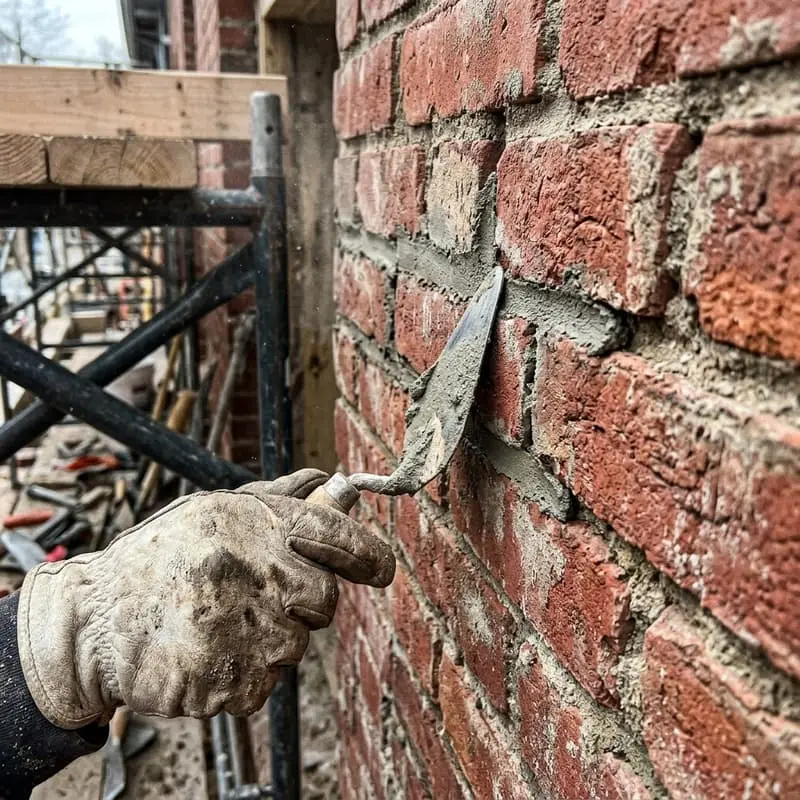
Older, softer masonry can be damaged when a dense patch mortar forces moisture into the brick or stone instead of letting the joint manage it.
Serving ZIP 06901 and nearby Fairfield County communities
For Stamford masonry, the visible crack is only part of the diagnosis. Dense development, roof drainage, paved side yards, and mixed-age additions can direct water toward brick, stone, chimneys, and steps in ways that a surface patch will not solve.
Stamford properties range from older masonry homes and multifamily buildings to newer additions built on tightly graded lots. Freeze-thaw cycling, wind-driven rain, and runoff concentrated by paved surfaces can expose weak mortar and drainage details.
Brick, stone, chimney, step, wall, and mortar assessment with repair recommendations based on moisture exposure and material compatibility.
Older, softer masonry can be damaged when a dense patch mortar forces moisture into the brick or stone instead of letting the joint manage it.
High, exposed masonry receives wind-driven rain on several faces; crowns, caps, flashing, and upper joints need to be checked together.
Settlement and winter ice often show first where stoops or landings meet driveways, walks, and tightly graded entries.
An inspection should separate cosmetic cracking from active movement, then trace roof, grade, and downspout water before a repair scope is chosen.
Map open joints, spalled units, stair-step cracks, and previous patches.
Check caps, flashing, grade, and horizontal surfaces for water entry.
Compare existing brick, stone, and mortar before specifying replacement materials.
Separate localized repointing from movement that needs structural investigation.
The final scope depends on what the inspection finds. Common options for this service include:
Open or deteriorated joints are normally evaluated for removal depth, mortar compatibility, and the water source. Flexible sealant is useful at designed movement joints, but it is not a substitute for repointing ordinary masonry joints.
Often yes, when damage is localized and matching units can be sourced. The inspection should also address why those units failed so replacements are not exposed to the same trapped moisture.